
Plant-Based Protein: More Than 20 Grams on the Front of the Bag
Unlike most of the Balterra portfolio, protein is a macronutrient. That means it contributes calories, provides energy, and plays a daily role in how the body is built, repaired, and maintained.
Protein is also one of the most over-marketed categories in nutrition.
A label may say “20 grams of protein,” but that is only part of the story. A well-formulated plant-based protein should also consider amino acid profile, protein source, serving size, texture, digestibility, taste, and the ingredients added around the protein itself.
That is where the story gets interesting.
My protein thesis did not end with hype
In 2013, I earned my master’s degree in food science from Rutger’s University. My final defense focused on muscle protein synthesis, with an emphasis on animal- and plant-based proteins.
The audience was small: three faculty members and my now-wife, who brought plant-based foods to share with the professors while I presented. At the time, my conclusion was cautious. I did not believe the evidence was strong enough to say protein supplementation alone clearly enhanced athletic performance. I also noted that plant-based proteins were emerging but needed more study.
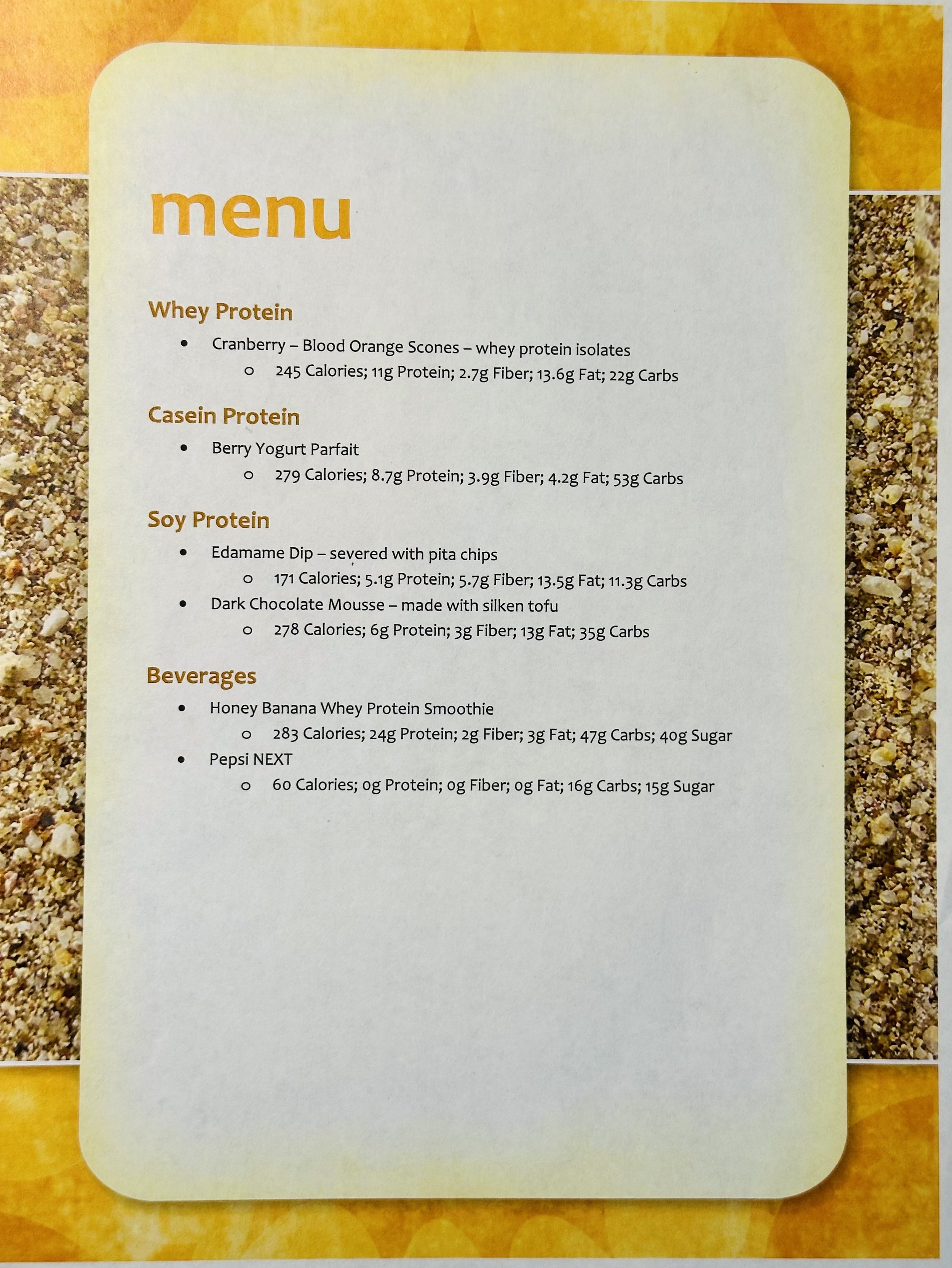
A real menu from my 2013 master’s defense, where protein sources were part of the conversation long before plant protein became mainstream.
Thank You Yelena!
Years later, I still think caution matters.
A recent meta-analysis reached a similar conclusion: protein supplements may have benefits in some settings, but the overall effect on athletic performance and recovery appears limited. Importantly, some of the positive findings came from studies where the protein group also consumed more total energy. That makes it hard to know whether the benefit came from protein itself, extra calories, or the overall nutrition plan.
That is not a reason to dismiss protein.
It is a reason to talk about it clearly.
Protein is not just protein
Proteins are made from amino acids. The body uses amino acids to build and repair tissues, support enzymes and hormones, and maintain normal biological function.
Of the 20 amino acids used to build proteins, 9 are considered essential because the body cannot make them in sufficient amounts. They must come from the diet.
Three of those essential amino acids are known as branched-chain amino acids, or BCAAs: leucine, isoleucine, and valine. Leucine gets a lot of attention because of its role in signaling muscle protein synthesis.
But this is where supplement marketing often gets too simple.
More BCAAs does not automatically mean better. More protein does not automatically mean better. The total diet, training status, age, calorie intake, protein quality, and consistency all matter in this equation.
That is why we prefer the phrase “well-formulated” over “high protein.”
Why plant proteins are often blended
Plant proteins can be excellent, but different plant sources have different amino acid profiles, textures, flavors, and functional properties.
That is why plant proteins are often blended.
Pea protein, pumpkin seed protein, and chia protein each bring something different to the formula. Combining plant sources can help improve the overall amino acid balance while also improving the sensory experience.
This matters because a protein powder is not useful if people do not want to drink it.
The early days of plant protein were rough. Many products were gritty, earthy, chalky, or difficult to finish. The category has improved significantly. Plant protein may never fully behave like whey in a shaker bottle, but it has become much more practical for daily use.
Why Digestibility matters
Protein is not just about what is on the label. It is also about how it feels when you use it.
Some people tolerate whey beautifully. Others prefer to avoid dairy. Some people use plant protein because of dietary preference, digestive comfort, or lifestyle fit.
Digestive comfort matters because protein powder is often a daily-use product. If a product feels heavy, gritty, overly sweet, or uncomfortable, it will not become part of a routine.
That is also why we think protein belongs in a broader conversation about gut health, daily habits, and practical nutrition, not just gym culture.
Why Serving size matters
A serving has to be realistic.
It should provide a meaningful amount of protein without becoming oversized, unpleasant, or difficult to use. More is not always better. A giant scoop that tastes bad or sits heavy is not automatically superior to a smaller, more practical serving that people can use consistently.
At Balterra, we think a good protein powder should fit into real life. That may mean a shake, smoothie, oatmeal, yogurt bowl, or, in my case, plant-based protein mixed with cow’s milk and creatine.
Yes, I combine plant and animal protein in my own routine.
Not because plant protein is “less than,” and not because whey is “better.” I do it because I like the broader amino acid profile, the taste, the practicality, and the routine.
Plant vs. whey is not a war
Whey is an excellent protein source for many people. It has a strong amino acid profile, mixes well, and has a long history in sports nutrition.
Plant-based protein can also be a strong choice.
The point is not to turn protein into a food fight. The better question is: What fits your body, your diet, your values, and your routine?
For some people, that is whey. For others, it is plant protein. For many people, it can be both.
What about heavy metals?
Plant proteins sometimes carry a stigma around heavy metals. This topic deserves more clarity than fear.
Heavy metals can be found in many foods and supplements because they occur naturally in soil, water, and agricultural systems. The presence of a heavy metal is not automatically the same thing as a harmful level.
The real question is not, “Does this contain any detectable amount?”
The better question is, “Are the levels within appropriate safety limits?”
At Balterra, we believe consumers deserve clear explanations, not fear-based shortcuts.
How Balterra thinks about plant protein
Balterra’s plant protein was built to be practical: recognizable plant protein sources, a meaningful serving size, and a formula designed to fit real daily routines.
Our goal is not to claim that protein powder is magic.
It is not.
Our goal is to offer a clear, good-tasting, plant-based option that can help people add protein in a simple and consistent way.
Protein is one of our favorite topics because it sits at the intersection of food science, exercise, formulation, digestion, sensory experience, and everyday behavior.
That is exactly where Balterra likes to be.
Practical over extreme.
Formulated for real life.
Want to see how we formulated ours? Explore Balterra’s plant-based protein here.